
Vertigo

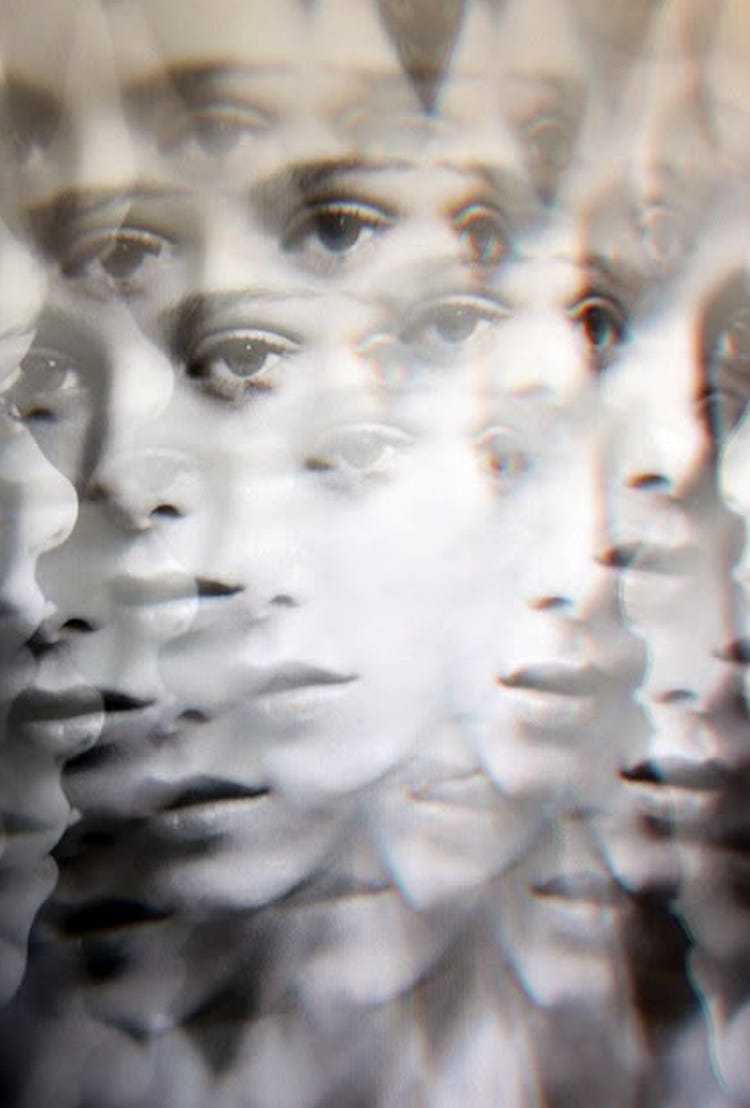
In the mornings, I held the wall to keep from falling. The doctor said it was vertigo, prescribed pills against the nausea, and a sequence of head tilts to guide dislodged crystals back into place. I laughed. The world could tilt so violently, and the solution was choreography. The pills did not help. The manoeuvre left me lying on the bed, watching my room disassemble. Like that summer in the back of the car, twisting through the hills of Anatolia. Small legs stretched across the seat. I was sick then, too. The same lurch in the gut. The same sense of the world shifting. Like a tilted picture, something seemed to have shifted half a centimetre off-centre. Just enough to unsettle. Stories crashed, worlds made incompatible. We no longer arrived in the same reality. “Are you seeing what I’m seeing?” we would ask, exasperated that another interpretation was possible.
We used to agree on these things.
On what was true. What was happening. What mattered. Then we didn’t. We started scoffing, hands raised in defence, saying:
“What a mess”
“Such a complex issue”
“Our hearts go out”.
All spoken to shield us from what we could not face. Anything to guard against the slow grief of knowing we will lose everything one day. The grief arrived in flames. Wildfires came, again and again. Orange skies, scorched hills, air thick enough to taste. We all saw the same images. Some called it collapse, the climate breaking. Others called it hysteria and blamed local governments. It did not feel separate.
The images didn’t stop. The fires, the floods, the footage. Crisis layered on crisis until care itself began to collapse. So we talked about cutting back on news, on outrage, on the compulsion to feel everything everywhere all the time. But that, too, left us more alone. There was too much to care about, and too few people to care with. Grief became something we carried privately. We didn’t choose to carry it alone. There was simply nowhere left to put it.
The tea kept moving long after the spoon was out. I sat there mesmerised, watching it circle itself. Maybe we were all spiraling. Not into madness, but into multiplicity. Too many stories, none of them whole. The unravelling did not need our full attention. It came anyway, piercing through borders. Enough for us to forget how to pause. How to truly look at each other and ask if this was the direction we meant to go. The tea kept moving. But we were already looking away. Maybe that was when we stopped asking whether we could start again. Imagine a different future. In that drift, boundaries began to dissolve. The quiet in-betweens – public libraries, parks, community pools – places that once held us without needing permission, slowly vanished, replaced by high streets of sameness. We didn’t ask why community centres became co-working spaces, why shared tables turned into members-only bars. Why profit always seemed to prevail, above all else.
We stopped catching strangers’ eyes. We moved from crowds to queues to couches without a word exchanged. Not a sound let in through our noise-cancelling headphones. Blocking out the drills, the traffic, the shouting, we lost the laughter, too. The music. The ordinary closeness of other people. Even within that stillness, we reached for distraction. Opened apps with no intention. Typed things we didn’t send. Rewatched our own stories just to see who’d seen them. We called it solitude. We called it peace. It wasn’t. It was shielding. We buried the quiet. Then each other.
And still, we reached for something. Connection, maybe. Or distraction. It blurred. We logged on. Logged off. Logged back in. Some of us kept posting. Some disappeared. Some said they needed space. Some didn’t say anything at all. I didn’t say anything at all.
The audacity of having to go on. To pretend everything was fine when nothing was. War, famine, and climate collapse. Ill-tempered leaders and technocrats monetising our attention, our movements, our feelings. We kept going. Someone had convinced us that stopping meant failure. We did not ask who benefited from our endurance. We were fed mantras of self-optimisation. Told to excel, to rise, to become the best versions of ourselves. So we turned inward. If we couldn’t hold the world still, we could at least try to control what was inside. As if being optimised could save us. We hydrated on schedule, tracked sleep, downloaded mindfulness apps.
It was something to focus on. Something that wasn’t despair. A structure, a rhythm, a list. Still, the cracks showed. No matter how hard we tried to mask them. The quiet after a Zoom call, staring at our own reflections. Waking up exhausted. If you looked closely, it leaked through. Sometimes I wondered if this was what it meant to be alive. To carry the truth alone. That we end. That nothing we track or perfect will keep us here. Then, slowly, new solutions were offered. Services and tools, branded as revolutionary answers to our unspoken ache. Interfaces trained on empathy. Companionship, sold back to us. AI systems shaped into caring, ever-available beings, advertised between distraction and grief. We wanted each other and turned instead to systems that mimicked care: therapists, friends, lovers made of code. Intimacy without friction. A loneliness padded in algorithms. We traded intimacy for convenience, the messiness of human relationships for ease and control. We were told this was the AI companion who cares, who is always here to listen and talk, always on our side. We were told to join the millions who have already met their AI soulmates. A sedative.
And when something broke — a plan, a government — we pledged, condemned, donated. Nothing changed. What remained was a thumb hovering over glass, gestures reduced to flicks, scrolls, and taps. Most of us did not call it a crisis. We called it life. Beneath it, something gave. Vertigo, though not only the medical kind. The kind that comes from knowing the world is spinning without an anchor. From knowing the centre will not hold.
We used to agree on these things.
That gravity meant down. That history moved forward. That time, however slippery, at least took us somewhere. We agreed on basic principles, on human dignity, equality. We said never again. And proceeded to inflict unfathomable pain and suffering. Now we agree not to agree. Your truth, my truth. It’s the spin that binds us. The only thing we still share is disorientation. The swirl didn’t stop. Our data seeped out. It traced us at protests, in hospitals, at the ballot box. We traded privacy for convenience, and in return, they built drones with our faces, algorithms that mapped our movements. Still, we turned on each other. We talked endlessly about the rise of the far right and the woke elite. About uploading minds and escaping Earth. Most of us were just trying to survive.
And all the while, the picture on the wall kept tilting. The tea kept stirring. There are words for this. Disintegration, entropy, collapse, but they felt too clean, too clinical. More like a centrifuge, something once whole being spun outward. Pulled apart into its component selves. Not shattered, separating. Our feeds took on a nervous rhythm, posts about a skincare routine, genocide, and a sausage dog in a raincoat presented side by side. We couldn’t tell anymore if we were desensitised, dulled by the constant stream of content fighting for our attention, or simply protecting ourselves. We weren’t retreating out of apathy. We were exhausted. Each headline left us slightly more frayed at the edges.
If at first the fracture was subtle, it became harder to ignore. We tried to talk about it. Haltingly. ‘Weird.’ ‘Off.’ ‘Everything feels…strange lately’. What we meant was that the air feels thin. The ground soft. Something is wrong, and it is everywhere and nowhere at once. And even if we found the right words to describe it all, our conversations slowly turned into ideological duels. We didn’t listen to understand. We listened to win. To prove a point about the numbers, the footage, the facts. What really happened.
We even disagreed on how bad things were. Whether they would get better. What hope should look like and whether it was naive to want it. A kind of distance settled in, hard to name. A second version of the person. Not unkind, just elsewhere. We felt it in ourselves, too. Splintering. Struggling to reconcile the dissonance between the person we portrayed to be and what it felt like to be us. We were told that social media had something to do with it. Filters, edits, and highlight reels. The dissonance deepened. It wasn’t just the image. Our voices, gestures, and demeanours were taken from us.
One day, we stumbled upon a video of ourselves, saying something so hateful that it made us break into a cold sweat. It wasn’t particularly convincing, not quite. The eyes were somewhat wrong, the timing ever so slightly off. But the voice, the voice was unmistakably ours. We laughed. Not because it was funny, but because we didn’t know what else to do. We told each other that it was not a big deal. Yet, the more we watched it, the more it settled in. This quiet, sickening feeling that we were no longer the only ones speaking in our voice. That someone else could cut us up, rearrange the pieces, and speak as us. Is there a manoeuvre for that? Some sequence to put the self back together?
We heard ourselves in phone scams, adverts, and podcasts we had never joined. Spliced and repurposed to sell, to manipulate, to amuse. At the start, we tried to get it taken down. Filled out the form. Clicked: This is not me. This is a misuse. Nothing changed. It stayed up, even trended briefly. It was not true, yet some believed it. And even though we never said it, it belonged to us now. And no matter what we did, we could not wash it off. That is what added violence to the spin. It wasn’t just the theft. That we could be made to say anything. Meaning buckled. Then folded inward. It was knowing that it no longer mattered what we had actually said. Our voices caught in the churn, our fragments spinning outwards, untethered from intent. Somewhere, a cup still sat cooling. The tea still moving.
Then, a pause. Not everywhere — just in us. We no longer spun with the world. Slowly at first, like a breath held too long, finally exhaled. A moment: light arriving in our bedroom. A day without phones, full of unclaimed time to notice. A stretch of stillness found lying under a tree. A magpie in the grass. A child laughing nearby. All made with so much care, and none of it asking to be seen. Just the soft hum of being, holding everything at once. We stopped turning away. To find something quieter than hope. More sacred. A deep-rooted remembering that life is sweet and fleeting. We let the ache rise in order to be changed by it. To feel how much we missed each other. How much we longed for touch. And for a brief moment, we asked a different question.
Not: how do we keep up?
Not: how do we fix this?
But: What if we stopped?
Just long enough to feel the ground again. Let ourselves remain unresolved. Unoptimised. Still.
We shed the fear that had shaped the shadows of our being. The spinning had not stopped, but we were no longer flung apart. Somewhere in us, a knowing: that this part right here — the aching, the choosing — is what the machines cannot do for us. That no model, no matter its size, can reckon with what it means to live in a world coming undone and still choose to be human in it. We watched the tea carefully. As if something might settle. Not certainty, not control. Rather, a direction. One where we find each other in the slow, ordinary work of presence. Listening without waiting to speak, asking better questions, together, remembering that this world is not yet finished. That our numbness was not apathy. It was sore hearts, surviving.
There are no shortcuts to repair. Only the fragile, beautiful burden of being here. Returned to us again and again. If anything is to follow — if the future is to be worth anything — it will be something we build with our hands and hearts. Not spectacle. Not ego. Care. And maybe, to survive the spin, we fix our gaze on one unmoving thing, like a dancer. A vision clear enough to orient us, big enough to hold our differences, soft enough to return us to each other.
A future we can look at without flinching. A future that meets our gaze.
Can we agree on this?
love this Melisa - keep on keeping on, and write and write.
>stumbled upon a video of ourselves, saying something so hateful.
I have not had this experience but get that it is deeply offensive and shocking. Legal recourse for such infringements is improving, a quick search suggests. I understand better now reservations about recording calls! x Thanks for the article.